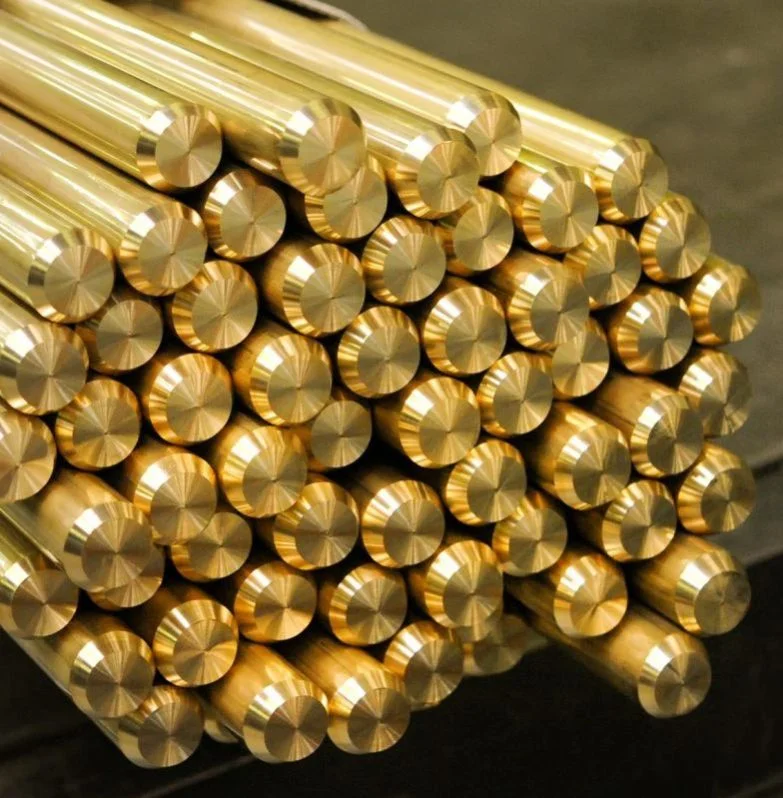
Walk through any CNC turning shop and you will see brass round bars feeding automatic lathes: valve stems, gas fittings, electrical terminals, fasteners and sanitary parts. Brass is the benchmark for machinability, and the right alloy decides cycle time, tool life and scrap rate. This guide from a brass round bars manufacturer in India compares the grades, standards and tolerances you need to know.
Brass round bars (also called brass rods) are solid copper-zinc alloy products made by hot extrusion and cold drawing. Most free-machining bars contain 2–3.5% lead, which breaks chips into short, easily cleared pieces and acts as an internal lubricant. Bars are supplied straight, in diameters from about 3 mm to 150 mm, in lengths of 3 m and 4 m or cut to order.
| Grade | UNS | EN | Composition | Features | Typical use |
|---|---|---|---|---|---|
| Free-cutting brass | C36000 | CW603N / CW614N | 61.5% Cu, 3.1% Pb, bal. Zn | Machinability rating 100, the benchmark | CNC turned parts, fittings, nozzles |
| Leaded brass | C38500 / C37700 | CW617N | 58–59% Cu, 2% Pb | Hot forging and machining | Forged valves, fittings, hardware |
| Cartridge brass | C26000 | CW505L | 70% Cu, 30% Zn | Cold formable, no lead | Contacts, springs, wire rod |
| Naval brass | C46400 | n/a | 60% Cu, 39% Zn, 1% Sn | Seawater resistant | Marine shafts and fasteners |
| Lead-free brass | C69300 | CW724R | Low-lead silicon brass | Potable water compliant | Lead-free fittings |
Our product range also includes wire-grade C26000 bar for spring contacts and mesh, and hexagonal bars; see our hex bars page as well.
Drawn brass bars are supplied in tolerance classes such as h9 or h11 on diameter, with straightness (for example 1–2 mm per metre) specified in the standard. Typical tempers are half hard (H02), hard (H04) and soft (O60); half hard is the machining default because it offers a good balance of strength and chip control. Extruded bars have wider tolerances and are suited to hot forging.
For forged components, see our guide on brass fittings, and for a high-conductivity alternative, read about copper round bars.
Melta Alloys manufactures extruded and drawn brass round bars in Umbergaon, Gujarat, with CNC turning centres in-house for downstream components, spectrometer and hardness testing, and traceable heat numbers. We export to 20+ countries with mill test certificates. Browse the brass round bars range or send your diameter list and grade requirement.
Free-cutting brass such as C36000 contains about 3% lead, which makes chips break easily and gives the highest machinability of any copper alloy, with a rating of 100.
CW614N (CuZn39Pb3) is optimised for machining, while CW617N (CuZn40Pb2) has a slightly lower lead content and better hot-forging performance.
Lead-free or low-lead brass for potable water is available on request; mention the standard and approval required.
Drawn bars are available in h9 and h11 tolerance classes. Specify the class and straightness on your enquiry.
Send your grade, size, standard and quantity — our team replies with pricing, lead time and mill test certificate details.