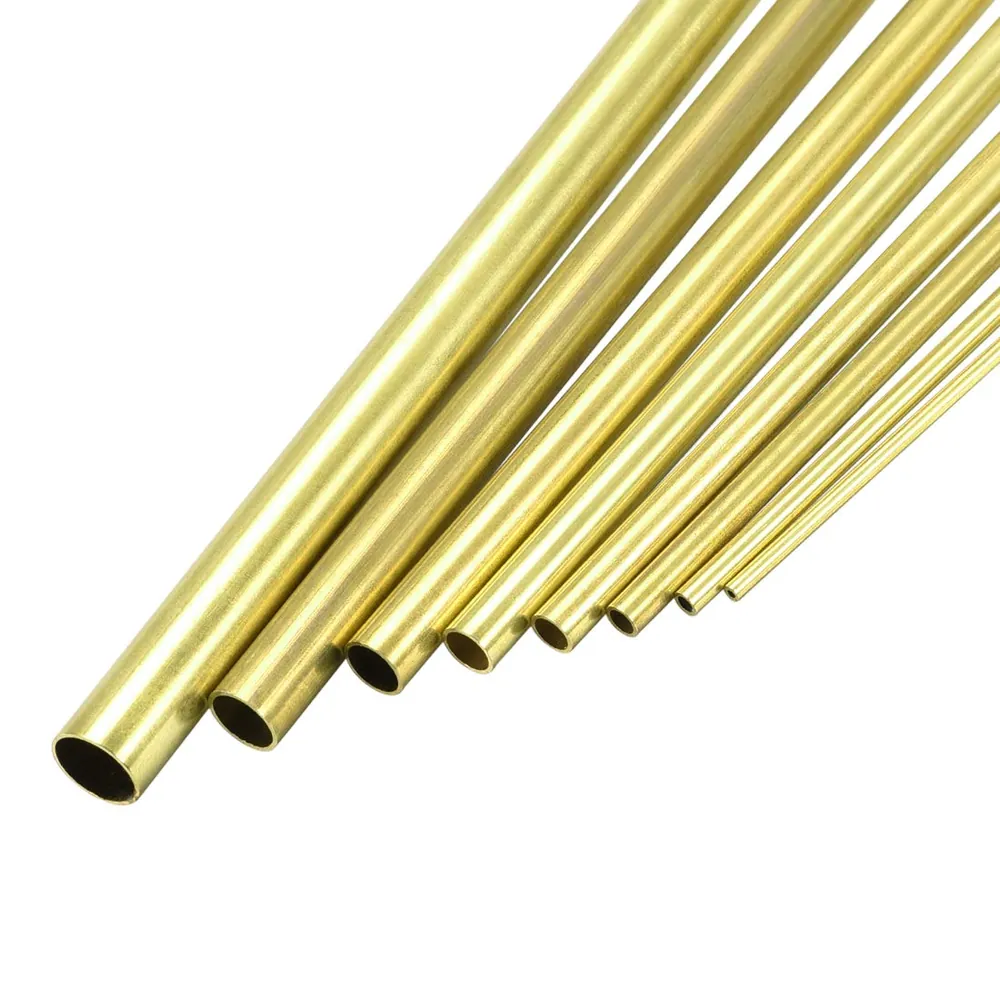
Brass pipes are the traditional choice where threaded joints, good corrosion resistance and a smooth bore are needed together: hot-and-cold water plumbing, fuel and gas distribution, marine seawater lines and process piping. This guide from a brass pipes manufacturer in India explains the alloys, standards, sizing and fabrication details to specify the right product.
Brass pipe follows iron pipe size (IPS) dimensions so it can be threaded and connected with standard fittings, while brass tube is sized by outside diameter and wall thickness. Pipe walls are thicker, typically in regular and extra-strong series to ASTM B43, because thread cutting removes metal. If you need thin wall, specify tube (see our brass tubes guide); if you need threads, specify pipe.
| Alloy | UNS | Composition | Why it is used |
|---|---|---|---|
| Red brass | C23000 | 85% Cu, 15% Zn | Best corrosion resistance among brasses, ideal for hot water and plumbing; the alloy named in ASTM B43 |
| Cartridge brass | C26000 | 70% Cu, 30% Zn | Strong and formable; general fluid handling |
| Yellow brass | C27200 | 63% Cu, 37% Zn | Economical, strong |
| Naval brass | C46400 | 60% Cu, 39.25% Zn, 0.75% Sn | Seawater and marine service |
| Admiralty brass | C44300 | 71% Cu, 28% Zn, 1% Sn | Cooling-water lines and exchangers |
Red brass is rated highly because its high copper content resists dezincification and stress corrosion in potable water.
Brass pipe is normally supplied from 1/8 in NPS upwards, in regular and extra-strong walls, in random lengths of about 3 m to 6 m or cut to length. Larger pipe sizes and special walls can be made from extruded stock. Standard NPS pipe has an OD slightly larger than the nominal size, so quote NPS and schedule or the actual OD and wall.
For drinking water, regulations in many countries limit lead in wetted brass. Red brass pipe for potable use is available in low-lead or lead-free compositions; check the standard and approvals required in your destination market.
For fittings that connect these pipes, see our guide to brass fittings; for copper alternatives, read about copper pipes.
Melta Alloys manufactures seamless brass pipes and Naval and Admiralty brass pipes in Umbergaon, Gujarat. With extrusion and tube mills, spectrometer analysis, hardness testing and hydrostatic testing up to 500 bar, we supply sizes from 6 mm to 600 mm OD in lengths up to 12 m to customers in 20+ countries, each shipment with a mill test certificate. View the brass pipes and tubes range or send your enquiry.
Red brass C23000 (85/15) is widely preferred for potable and hot water plumbing because of its excellent corrosion and dezincification resistance.
Yes. Brass pipes in regular or extra-strong wall can be threaded NPT or BSP. Extra-strong walls leave more metal after threading.
Naval brass (C46400) contains tin that improves seawater resistance and is used for marine pipes and fittings.
Standard random lengths of about 3–6 m are available; custom lengths up to 12 m can be supplied.
Send your grade, size, standard and quantity — our team replies with pricing, lead time and mill test certificate details.