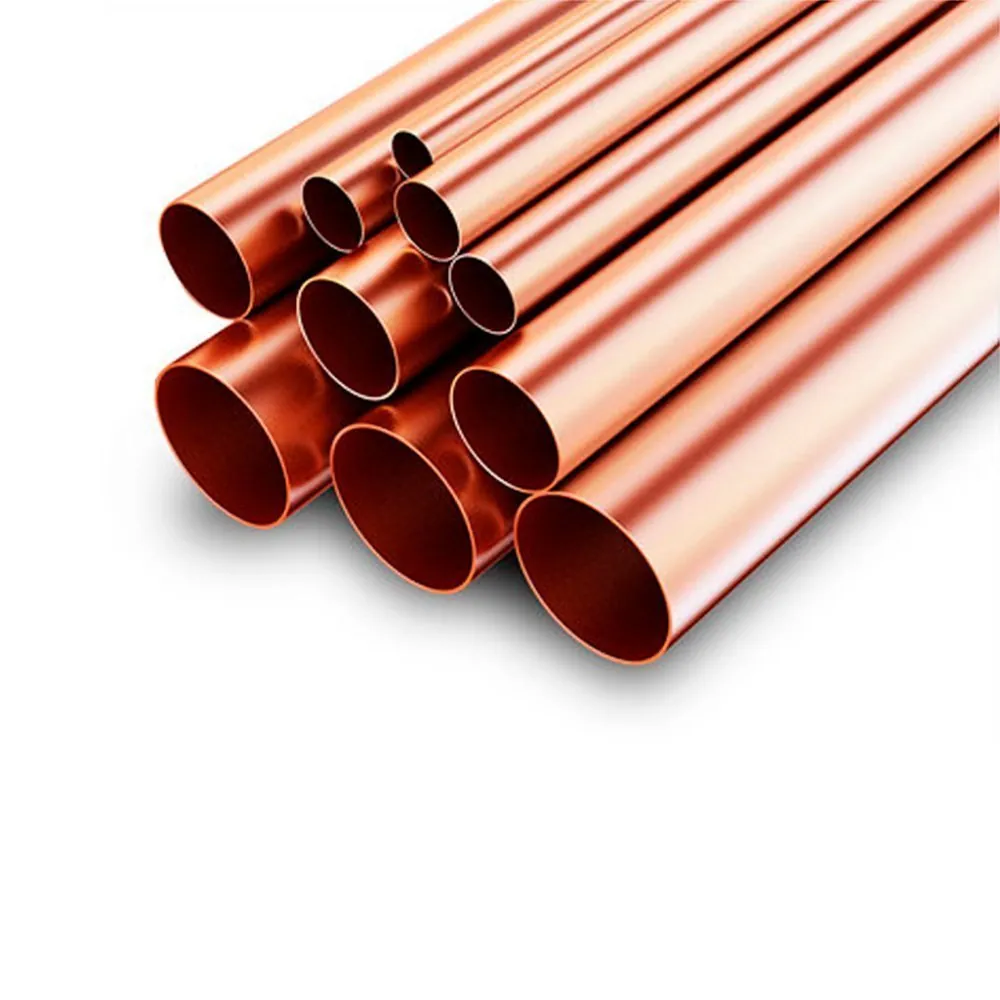
Heating, ventilation and air-conditioning (HVAC) systems depend on copper because it conducts heat efficiently, resists refrigerant and oil attack, bends without cracking and can be joined by brazing into leak-tight circuits. The product that does the job is ACR copper tube (air conditioning and refrigeration tube). This guide from a copper HVAC tubes manufacturer in India covers the standards, cleanliness requirements, wall-thickness selection and installation practice that decide whether an HVAC circuit lasts 20 years or fails in two.
Copper HVAC tubes are seamless, round copper tubes produced specifically for refrigerant lines, coils and heat-exchanger circuits. They are made from deoxidised copper (C12200, Cu-DHP) and processed to a higher cleanliness standard than ordinary plumbing tube: the bore is cleaned, dehydrated and sealed at the mill so no moisture, oil or debris enters the sealed system. The governing standards are:
| Form | Temper | Typical use |
|---|---|---|
| Pancake coil | O60 soft | Installer-friendly refrigerant lines |
| Level wound coil | O60 soft | OEM coil and hairpin production |
| Plain soft coil | O60 soft | Short runs, service and repair |
| Straight length | H58 hard drawn | Large OD refrigerant risers and headers |
Soft coils are common up to about 7/8 in OD; larger refrigerant lines are normally supplied as hard drawn straight lengths, 3 m or 5 m long or cut to order.
A refrigerant circuit is a sealed, closed loop. Any moisture left in the tube can freeze in the expansion valve or react with POE or PAG oils to form acids; any residue or scale can block filter-driers and capillaries. ACR tube is therefore:
On site, installers should keep tube ends capped until the moment of connection and always flow nitrogen through the line when brazing so that no oxide forms inside.
Operating pressures differ widely between refrigerants. R410A and R32 run at roughly 50–60% higher pressure than R22, so tube selected for older refrigerants may be inadequate. Wall thickness is chosen from the design pressure, tube OD, temperature and the allowable stress of the annealed copper at brazed joints. Designers normally refer to the formulas in the standard or to EN 378 for refrigeration systems, and use a safety margin appropriate to the system. Newer low-GWP refrigerants such as R32 and the flammable hydrocarbon R290 are also used with copper; because charge limits and safety requirements differ, always follow the equipment maker's pressure rating.
ACR tube to ASTM B280 is sized by actual outside diameter in 1/8 in increments (for example 1/4, 3/8, 1/2, 5/8, 3/4, 7/8 and 1-1/8 in), whereas metric EN 12735 tube is specified by OD in millimetres (for example 6, 8, 10, 12, 15, 16, 18, 22, 28 mm). Wall thickness tolerances and ovality are controlled so that fittings seat evenly and the tube bends cleanly. Custom sizes for OEM drawings are available.
Give your supplier the standard (ASTM B280, EN 12735), OD and wall thickness, temper and supply form (coil or straight), cleanliness and sealing requirements, quantity per size, packing and destination port. For OEM coils, add the spool or coil dimensions and tolerance drawing.
Melta Alloys manufactures copper tubes at Umbergaon, Gujarat and ships to HVAC wholesalers, contractors and OEMs in 20+ countries. Controlled drawing and annealing, in-house spectrometer analysis, hardness and hydrostatic testing, and a mill test certificate with every shipment give your purchasing and quality teams the documents they need. See the copper pipes and tubes range or the general copper tubes manufacturing guide for more technical background.
ACR stands for air conditioning and refrigeration. ACR copper tube is seamless copper tube cleaned, dehydrated and sealed to ASTM B280 or EN 12735 so it is safe to use in sealed refrigerant circuits.
Not unless it meets the cleanliness requirements for refrigeration. Plumbing tube (for example ASTM B88) is not dehydrated and sealed, and residual moisture or oil can damage a refrigerant system.
R410A operates at higher pressure than R22, so the tube wall must be selected for the higher design pressure. Always check wall thickness against the equipment manufacturer's recommendation and the applicable code.
Yes. We supply pancake, level wound and plain soft coils as well as hard drawn straight lengths, cleaned, capped and packed for export.
Send your grade, size, standard and quantity — our team replies with pricing, lead time and mill test certificate details.